
Gardening enthusiasts are always seeking innovative ways to enhance soil fertility and reduce waste, and a DIY worm tower offers a fantastic solution.
Not only is it an eco-friendly approach to managing kitchen scraps, but it also enriches your soil without breaking the bank.
This guide will walk you through the steps to construct your own worm tower for less than $12, or even for free, using readily available materials.
What You Need to Know Before Starting
A worm tower, also known as a wormery, integrates directly into your garden to process organic waste through vermicomposting.
This method uses worms to convert organic materials, including your kitchen scraps, into nutrient-rich compost.
This process not only aids in waste reduction but also improves soil health by providing a constant supply of natural fertilizer.
Composting worms, such as red wigglers, are ideal for this purpose because they thrive in confined, nutrient-rich environments.


Materials You’ll Need
To begin building your worm tower, you need several materials, most of which you might already have lying around or can obtain for free:
- PVC pipe or a large diameter bamboo: about 3-4 feet in length.
- Drill with a hole-saw attachment: for making aeration holes in the pipe.
- Saw: to cut the pipe to the desired length.
- Cover: to keep the top of the tower closed and secure from pests and rain.
Check local recycling centers or community groups for free materials. Many people have spare PVC pipe pieces from previous projects, and they might be willing to give them away.
Step-by-Step Guide to Building Your Worm Tower
1. Select the Optimal Location
Choose a spot in your garden that is partially shaded to prevent the worm tower from overheating. The location should retain moisture but not be too wet, and it should be easily accessible for adding kitchen scraps and performing maintenance.
2. Prepare Your Materials
Measure and cut your PVC pipe or bamboo to about 3 feet, which is an optimal height to accommodate a sufficient amount of waste without becoming too heavy.
Using your drill, create evenly spaced holes around the circumference of the pipe for aeration. The holes should be large enough to allow worms to move in and out freely—about 1/4 inch in diameter.
3. Assemble the Worm Tower
After drilling the holes, ensure all sharp edges are smoothed out to protect the worms from injury. If you’re using PVC, you might sand the edges slightly. If using a bamboo stick, ensure it has no splits that would allow compost material to escape.
4. Install the Worm Tower
Dig a hole in your selected garden spot deep enough to bury about one-third to one-half of the tower.
This depth ensures that the tower remains upright and is accessible for worms to migrate from the surrounding soil.
Carefully place the tower in the hole and backfill with soil, tamping it down lightly to remove air pockets and secure the tower.
5. Add Worms and Organic Waste
Fill the bottom of the tower with a layer of aged compost or garden soil to give your worms a healthy starting environment. Introduce a handful of composting worms, such as red wigglers, into the tower.
Begin adding your kitchen scraps gradually—start with small amounts to see how quickly the worms can process the waste.
Suitable materials include vegetable peels, fruit scraps, coffee grounds, and eggshells. Avoid meat, dairy, and oily foods, which can attract pests and cause odors.
How to Maintain Your Worm Tower
Maintaining a worm tower is straightforward but requires regular attention to ensure your worms are healthy and active.
Regularly check the moisture level in the tower; it should feel like a wrung-out sponge. If it’s too dry, add a little water, but be cautious not to overwater, as excessive moisture can lead to odor issues and potentially drown your worms.
Feed your worms a balanced diet of kitchen scraps such as vegetable peels, fruit waste, coffee grounds, and eggshells. Avoid meats, dairy products, and oily foods, which can attract pests and cause bad smells.
Stir the contents gently every few weeks to aerate the pile, which helps prevent the compost from becoming compacted and anaerobic.
Troubleshooting Common Issues
One common issue you might encounter is an unpleasant odor emanating from your worm tower. This is usually due to overfeeding or poor aeration.
If you notice a smell, reduce the amount of food you’re adding and turn the compost more frequently to incorporate air.
Additionally, if you observe that the worms are not active or seem to be dying, check for extreme temperatures or moisture levels. Worms thrive in a moist environment, but they can be sensitive to excessive cold or heat.

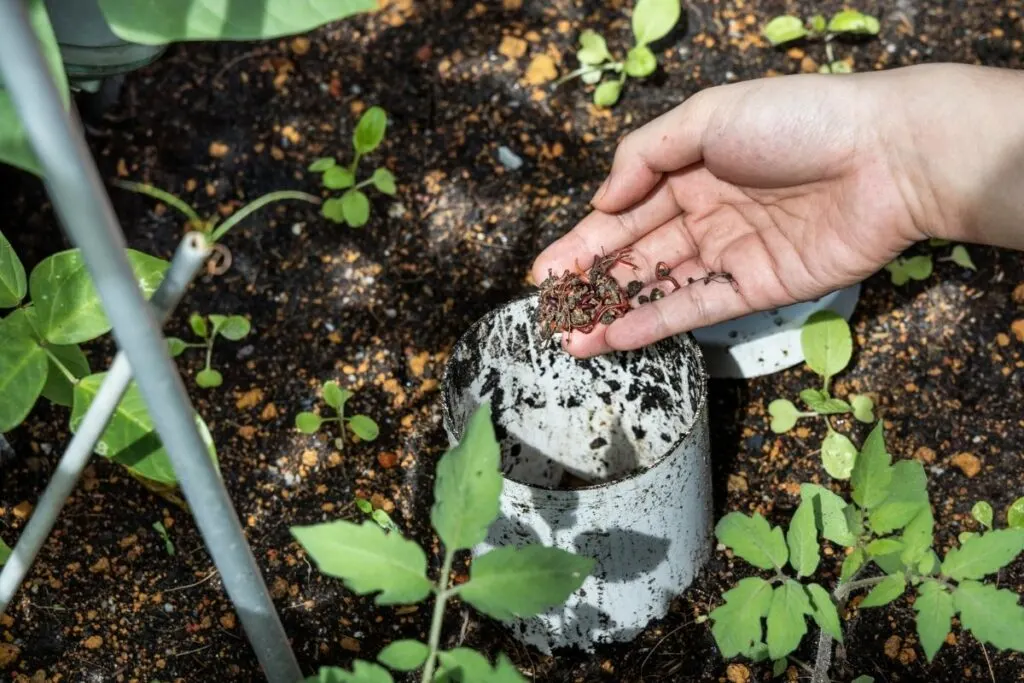
Another issue could be attracting pests such as flies or rodents. To prevent this, ensure the lid of your worm tower is secure and that you are not adding inappropriate materials like meats or fatty foods.
Using a layer of dry bedding material like shredded newspaper or leaves on top of the food scraps can also help cover the smell and deter pests.
Benefits of Having a Worm Tower
The benefits of having a worm tower in your garden are numerous. Firstly, it significantly reduces household waste by recycling kitchen scraps into valuable compost. This compost is rich in nutrients and can improve soil structure, enhancing plant health and growth.
Additionally, the presence of worms aerates the soil and increases its water retention capabilities, which can be especially beneficial during dry periods.
Worm towers also promote a sustainable approach to gardening by reducing reliance on chemical fertilizers.
The natural compost produced is an excellent source of slow-release nutrients, which is better for plant health and the environment.
Furthermore, engaging in worm composting can be an educational experience for families, teaching children about sustainability and the importance of worms in our ecosystem.
Building and maintaining a worm tower is a rewarding endeavor that enhances your garden’s productivity and sustainability.
With minimal investment and simple maintenance, you can transform your organic waste into rich compost that will benefit your plants all year round.
Whether you’re an experienced gardener or just starting, a worm tower is an excellent addition to any garden.