
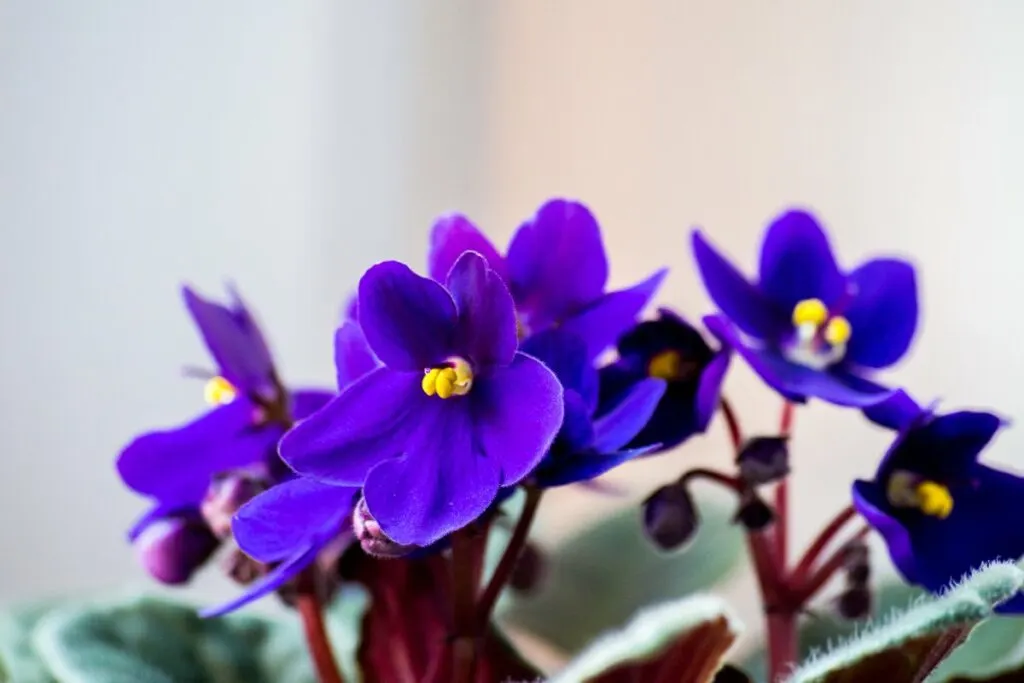
African violets, with their vibrant blooms and lush foliage, are a favored choice among houseplant enthusiasts.
Their ability to flower multiple times a year makes them particularly appealing, but achieving continuous blooming requires specific care.
This article outlines eight key strategies to keep your African violets flourishing and blooming throughout the year.
1. Optimal Lighting
Light is a critical factor in the health of African violets. These plants thrive in moderate to bright, indirect sunlight. Too much direct sunlight can scorch their delicate leaves, while too little can hinder their blooms.
Ideally, place your African violets near a north-facing window or a few feet away from a south or west-facing window to ensure they receive the right amount of light.
If natural light is scarce, especially during winter months, consider using a grow light. Fluorescent or LED grow lights placed about 12 inches above the plants can provide the necessary spectrum of light for 12-14 hours a day, mimicking the natural solar cycle and encouraging consistent flowering.

2. Ideal Watering Practices
Watering your African violets properly is essential to stimulate flowering. These plants prefer their soil to be consistently moist, but not soggy.
The best method to water an African violet is from the bottom, allowing the plant to absorb moisture through the drainage holes.
This technique helps avoid water touching the leaves, which can cause unsightly spots and potential rot.
To execute bottom watering, simply place your plant in a container with about an inch of water and let it sit for about 30 minutes. After the soil feels moist at the top, remove any excess water to prevent root rot.
Be vigilant for signs of overwatering, such as limp or yellow leaves, or underwatering, indicated by dry, brittle leaves.
3. Humidity and Temperature Control
African violets require a specific environment to truly thrive—ideal temperatures range from 65°F to 75°F (18°C to 24°C), with humidity levels around 50%.
If your home is dry, especially in winter, use a humidifier or place a tray of water near your heating system to increase the ambient moisture.
Another simple method is to place a water-filled tray with pebbles just under the plants; ensure the pots are sitting above the water line to avoid root issues.
Avoid placing your African violets in drafts or near heating and cooling vents, as sudden temperature changes can stress the plants and hinder blooming.
4. Proper Soil and Repotting
The right soil mix is crucial for the health of African violets. These plants flourish in well-draining soil that’s slightly acidic, with a pH between 6.0 and 6.5.
A mix specifically designed for African violets, which typically contains peat moss, perlite, and vermiculite, helps ensure proper drainage and aeration.
Repotting is recommended every six months to a year to refresh the soil and encourage healthy growth.
When repotting, gently remove the plant from its old pot, trim any excessively long or rotted roots, and replant in fresh soil in a slightly larger pot.
This rejuvenation process not only revitalizes the plant by providing fresh nutrients but also stimulates flowering.
5. Fertilization Techniques
Feeding your African violets the right type of fertilizer is a key element in achieving year-round blooms. Use a balanced fertilizer formulated specifically for African violets; it typically contains equal parts nitrogen, phosphorus, and potassium (such as 14-14-14).
Fertilize your plants every 4 to 6 weeks, diluting the fertilizer to half the recommended strength to avoid nutrient overload, which can lead to root burn and inhibit blooming.
Additionally, during the winter months, reduce fertilization frequency to give your plants a rest. Watch for signs of deficiency such as pale or small leaves, which might indicate a need for a slight increase in feeding.
6. Pruning and Cleaning
Regular pruning and cleaning are crucial to maintaining the health and aesthetics of African violets. Remove wilted or dead blooms and leaves to redirect the plant’s energy towards new growth and further blooming.
Use sterile scissors or tweezers to avoid spreading any potential diseases. Additionally, keeping the leaves clean ensures the plant can efficiently photosynthesize.
Wipe the leaves gently with a soft cloth or brush; avoid using water, as it can cause spots and damage the foliage. This not only keeps the plant looking fresh but also prevents issues like fungal infections.
7. Pest Management
Keeping pests at bay is vital for the health of your African violets. Common pests include mealybugs, spider mites, and aphids. Regular inspections can help catch infestations early.
If pests are found, isolate the affected plant to prevent spread and treat it with an appropriate insecticide or a natural solution like neem oil or a mild soap solution.


Preventive measures such as maintaining proper humidity and avoiding overhead watering reduce the risk of pest problems. Always ensure good air circulation around the plants, as stagnant air can promote pest proliferation.
8. Advanced Techniques for Encouraging Blooms
To further encourage your African violets to bloom, consider implementing some advanced techniques.
Introducing a slight drop in temperature during the night (about 5 to 10 degrees) can simulate natural conditions that trigger flowering.
Some growers also find success with “shock” methods, like briefly exposing roots to air or slightly constricting roots with a tight pot to induce stress-flowering.
However, these methods should be used cautiously as they can stress the plant too much if not done correctly.
Lastly, understanding the bloom cycle can help; providing a period of rest by reducing water and fertilizer in the winter can lead to vigorous growth and blooming in the following season.
By following these eight tips—providing proper lighting, watering, temperature and humidity, soil conditions, fertilization, pruning and cleaning, pest management, and utilizing advanced blooming techniques—you can enjoy the lush, vibrant beauty of African violets in your home all year round.
Consistency and attention to the specific needs of your plants are the keys to a flourishing display.